Summary
A Data Retention Policy defines how long industrial data is kept in a system and establishes the rules governing its storage, archival, and deletion across different storage tiers and lifecycle stages. In manufacturing and R&D environments, these policies are essential for managing the massive volumes of sensor data, production records, and experimental results while balancing regulatory compliance requirements, storage costs, and operational performance needs. Data retention policies directly impact predictive maintenance capabilities by determining how much historical data is available for trend analysis, and support time-series analysis applications by defining data accessibility periods for different analytical use cases.
Core Components and Storage Tiers
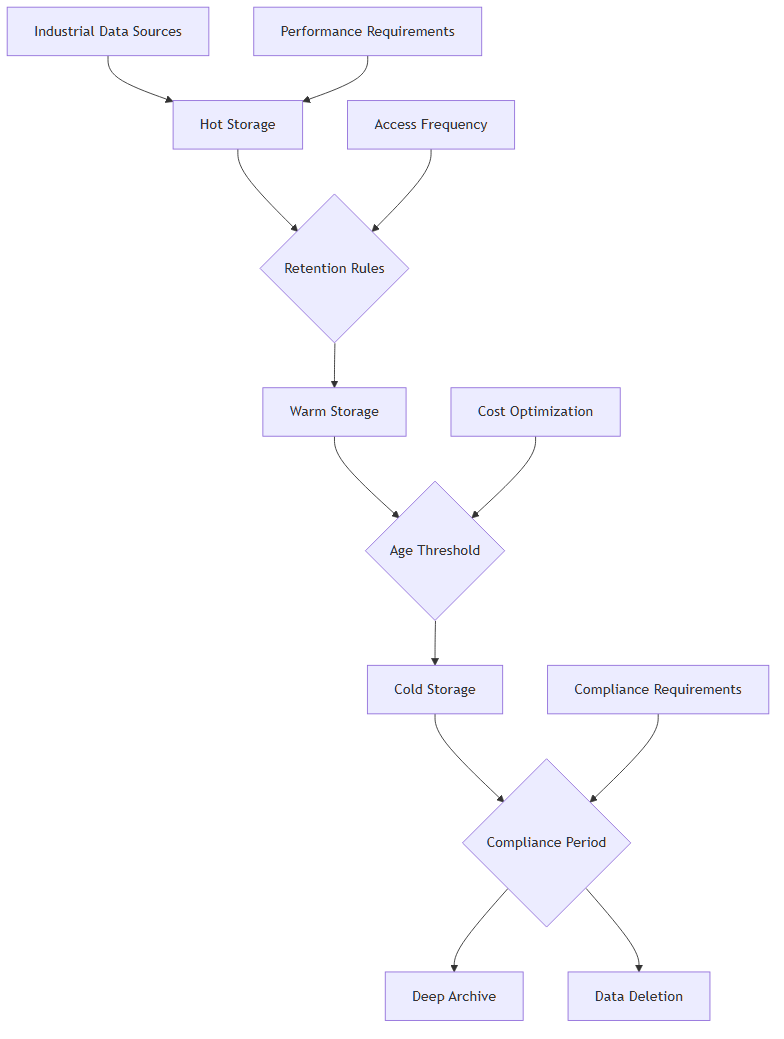
Industrial data retention policies typically organize data across multiple storage tiers, each optimized for different access patterns and cost considerations:
Applications and Use Cases
Manufacturing Operations
Production facilities implement retention policies to maintain immediate access to current operational data while efficiently managing historical production records, quality measurements, and equipment performance data. These policies ensure that critical operational information remains accessible while controlling storage costs.
Industrial R&D
Research environments require retention policies that preserve valuable experimental data and simulation results for extended periods while managing the transition of active research data to archived status as projects conclude and new research begins.
Regulatory Compliance
Industries with strict regulatory requirements use retention policies to ensure that required data is preserved for specified periods while systematically managing the disposal of data that is no longer legally required to be retained.
Policy Implementation Strategies
Effective data retention policies in industrial environments incorporate several key strategies:
Regulatory and Compliance Considerations
Industrial data retention policies must address various regulatory and compliance requirements:
- Industry Standards - Comply with sector-specific requirements for data preservation periods
- Quality Management Systems - Support ISO 9001 and other quality standards requiring document and record retention
- Environmental Regulations - Maintain environmental monitoring data for required compliance periods
- Safety Requirements - Preserve safety-related data for incident investigation and regulatory review
- Intellectual Property Protection - Retain research and development data to support patent applications and innovation documentation
Performance and Cost Optimization
Data retention policies directly impact system performance and operational costs:
Best Practices for Industrial Environments
Successful implementation of data retention policies follows several industry best practices:
Related Concepts
Data retention policies integrate closely with data partitioning strategies for efficient data organization, industrial data collection systems for lifecycle planning, and data orchestration platforms for automated policy execution. They also connect with data compression techniques for storage optimization and data loss window considerations for backup and recovery planning.
Well-designed data retention policies enable industrial organizations to maximize the value of their data assets while maintaining operational efficiency, regulatory compliance, and cost effectiveness throughout the complete data lifecycle.