Core Components of Industrial Observability Stacks
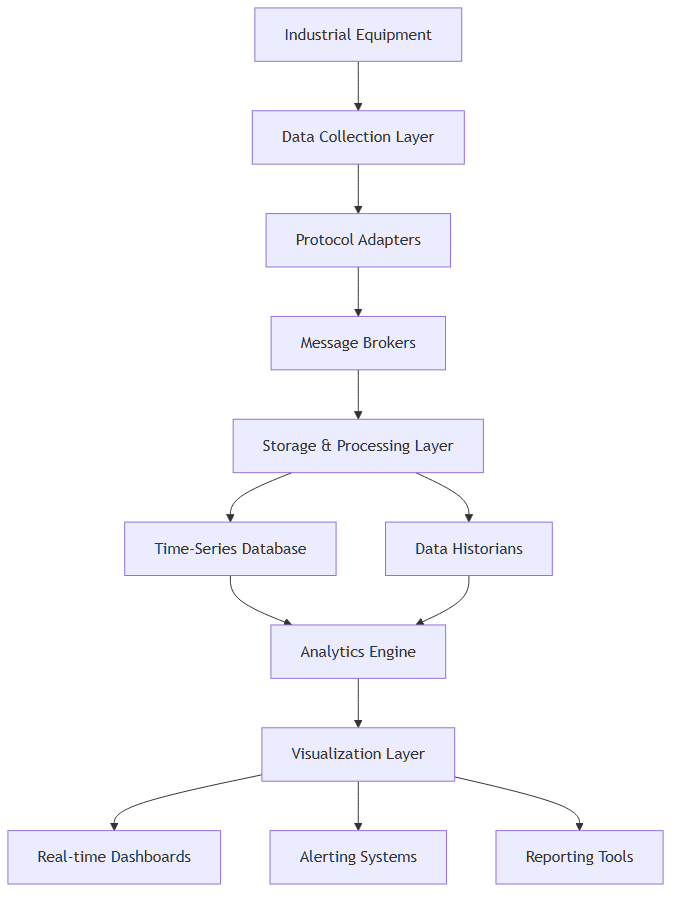
Modern industrial observability stacks comprise several interconnected layers that work together to transform raw sensor data into actionable insights:
Data Collection Layer handles the ingestion of telemetry data from industrial sensors, PLCs, SCADA systems, and edge devices. This layer supports multiple communication protocols including OPC-UA, MQTT, and Modbus to ensure compatibility with diverse industrial equipment.
Storage and Processing Layer manages both real-time and historical data through optimized data historians and time-series databases. This layer implements intelligent data retention policies, compression algorithms, and indexing strategies to handle high-volume industrial data streams efficiently.
Analytics and Visualization Layer provides tools for creating real-time dashboards, conducting trend analysis, and generating automated reports for operational teams and management.
Applications in Industrial Environments
Manufacturing Operations Management
Observability stacks enable comprehensive monitoring of production lines, quality control systems, and equipment health. By integrating data from multiple sources, engineers can identify bottlenecks, predict maintenance needs, and optimize production schedules based on real-time performance metrics.
Industrial R&D and Testing
Research facilities utilize observability stacks to monitor experimental setups, validate digital twin models, and collect data for prototype testing. The unified platform allows researchers to correlate data from different measurement systems and identify patterns that might not be visible when analyzing individual data sources.
Predictive Maintenance Programs
Industrial observability stacks support advanced maintenance strategies by combining vibration analysis, thermal monitoring, and operational data to predict equipment failures before they occur. This proactive approach reduces unplanned downtime and extends equipment lifecycle.
Implementation Architecture Patterns
Industrial observability stacks typically follow a hot-warm-cold storage architecture to balance performance requirements with cost considerations:
Technology Integration Considerations
Data Ingestion Protocols
Modern industrial observability stacks must support multiple data ingestion methods including:
- Protocol buffer ingestion for high-performance, structured data transmission
- JSON-based APIs for flexibility and ease of integration
- Industrial protocol adapters for legacy equipment connectivity
- Edge computing integration for local processing and bandwidth optimization
Scalability and Performance
Key performance characteristics include:
- High-throughput ingestion capabilities to handle thousands of sensor readings per second
- Low-latency querying for real-time alerting and operational dashboards
- Efficient compression to minimize storage costs while maintaining query performance
- Horizontal scaling to accommodate growing data volumes and user bases
Best Practices for Industrial Implementation
Performance Optimization Strategies
Effective observability stack performance requires careful attention to:
- Query optimization through proper indexing and aggregation strategies
- Network bandwidth management using edge processing and intelligent data filtering
- Storage tiering to balance cost and performance across different data age categories
- Caching strategies for frequently accessed analytical queries and dashboard updates
Related Concepts
Industrial observability stacks integrate closely with edge computing infrastructure, machine learning platforms for anomaly detection, and real-time data ingestion systems. These interconnected technologies create comprehensive industrial intelligence ecosystems that support data-driven decision making across all levels of manufacturing and research operations.