Understanding Observability Metrics Fundamentals
Observability metrics differ from traditional monitoring approaches by providing comprehensive visibility into complex industrial systems rather than simple status indicators. While conventional monitoring typically focuses on predefined thresholds and alerts, observability metrics enable engineers to understand system behavior patterns, identify root causes of performance issues, and make data-driven decisions for system optimization.
These metrics form the foundation of modern industrial digital twin implementations, where physical assets are continuously monitored and their virtual counterparts updated with real-time operational data.
Core Components of Industrial Observability Metrics
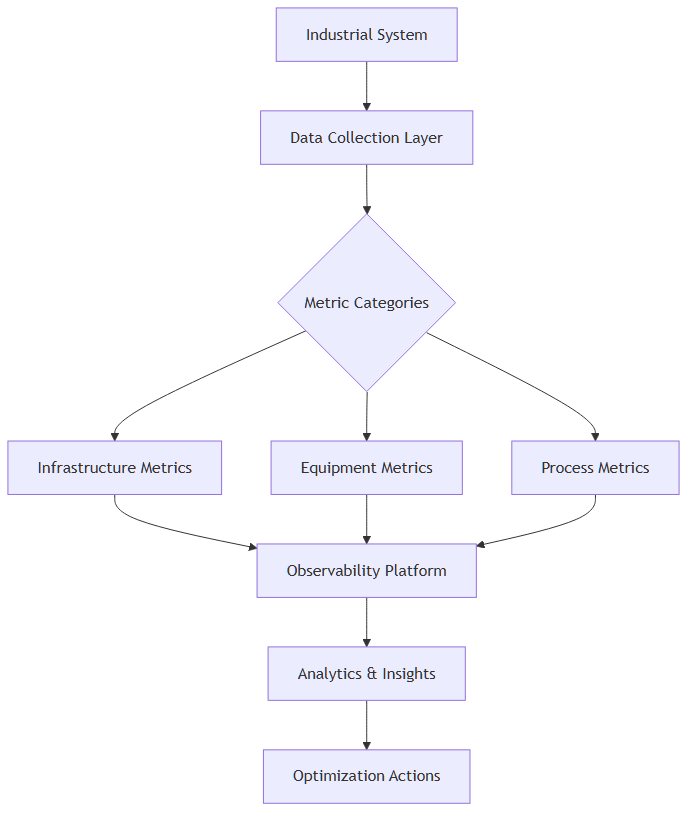
Industrial observability metrics typically encompass three primary categories:
Applications and Use Cases
Industrial R&D
In research and development environments, observability metrics enable engineers to monitor experimental setups, track prototype performance, and validate simulation models against real-world data. These metrics support iterative design processes by providing continuous feedback on system behavior under various operating conditions.
Manufacturing Operations
Production facilities leverage observability metrics for predictive maintenance, quality control, and overall equipment effectiveness (OEE) optimization. Real-time monitoring of machine performance helps prevent unexpected downtime and maintains consistent product quality.
Model Based Systems Engineering
Observability metrics validate and refine system models by providing continuous data streams that can be compared against predicted behaviors. This feedback loop enhances model accuracy and supports evidence-based design decisions.
Implementation Considerations
Effective implementation of observability metrics in industrial environments requires:
Performance and Scalability Factors
Industrial observability metrics systems must handle high-velocity data streams while maintaining low latency for critical alerts. Key performance considerations include:
- Write throughput: Ability to ingest thousands of measurements per second from multiple sensors
- Query performance: Fast retrieval of historical data for trend analysis and reporting
- Storage efficiency: Optimized compression and retention policies for long-term data preservation
- Network bandwidth: Efficient data transmission protocols to minimize infrastructure load
Best Practices for Industrial Implementation
Related Concepts
Observability metrics work in conjunction with data historians for long-term storage, edge computing for local processing, and machine learning algorithms for predictive analytics. These interconnected technologies create comprehensive industrial intelligence platforms that support advanced manufacturing and research operations.