Understanding Batch Processing Fundamentals
Batch processing operates on the principle of accumulating data over time and then processing it all at once during predetermined intervals. This approach contrasts with real-time or stream processing, where data is processed immediately as it arrives. In industrial contexts, batch processing is particularly valuable for handling large-scale data analysis, report generation, and non-time-critical computational tasks.
The batch processing model involves collecting data inputs, storing them temporarily, and then processing the entire batch using computational resources optimized for throughput rather than latency. This approach maximizes resource utilization and enables complex analytical operations that would be impractical on individual data points.
Core Components of Batch Processing
Batch Processing Architecture
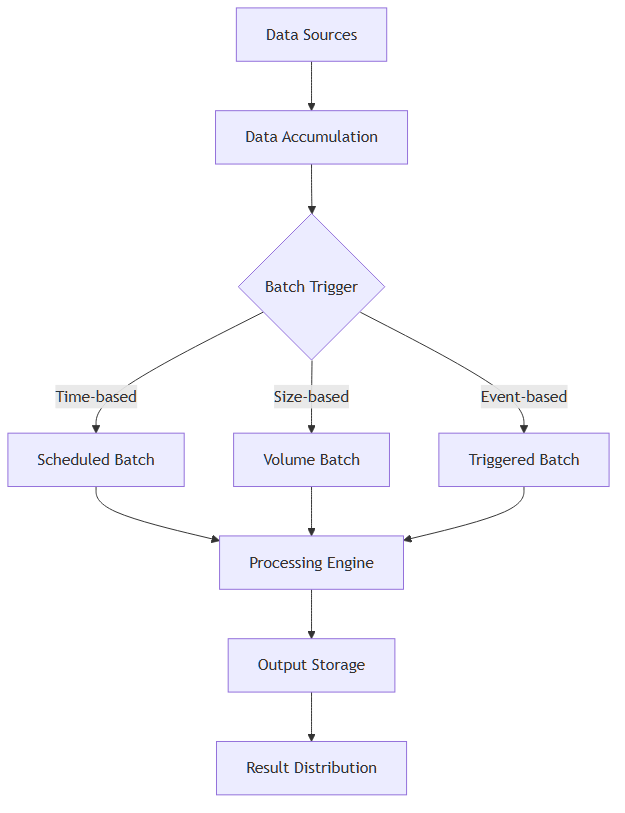
Applications in Industrial Data Processing
Manufacturing Analytics
Batch processing enables comprehensive analysis of production data collected over shifts, days, or weeks. This includes quality control analysis, equipment performance evaluation, and production optimization calculations.
Model Based Design Validation
In MBD environments, batch processing supports large-scale simulation validation by processing multiple simulation runs simultaneously and comparing results against historical operational data.
Regulatory Reporting
Industrial systems use batch processing to generate periodic compliance reports, environmental impact assessments, and safety audits that require comprehensive data analysis.
Implementation Approaches
Batch processing can be implemented using various frameworks and technologies:
`# Example of batch processing implementation from datetime import datetime, timedelta import pandas as pd from typing import List, Dict
class BatchProcessor: def __init__(self, batch_size: int = 1000, time_window: int = 3600): self.batch_size = batch_size self.time_window = time_window # seconds self.data_buffer = [] self.last_processing_time = datetime.now()
def add_data(self, data_point: Dict): self.data_buffer.append(data_point)
if self.should_process_batch(): self.process_batch()
def should_process_batch(self) -> bool: size_threshold = len(self.data_buffer) >= self.batch_size time_threshold = (datetime.now() - self.last_processing_time).seconds >= self.time_window return size_threshold or time_threshold
def process_batch(self): if not self.data_buffer: return
# Convert to DataFrame for processing df = pd.DataFrame(self.data_buffer)
# Perform batch operations results = self.calculate_batch_metrics(df)
# Store results self.store_results(results)
# Clear buffer self.data_buffer.clear() self.last_processing_time = datetime.now()
def calculate_batch_metrics(self, df: pd.DataFrame) -> Dict: return { 'mean_value': df['value'].mean(), 'max_value': df['value'].max(), 'min_value': df['value'].min(), 'count': len(df), 'timestamp': datetime.now() }`
Batch Processing vs Stream Processing
Understanding when to use batch processing versus stream processing is crucial:
Batch Processing is ideal for:
- Large-scale analytical computations
- Historical data analysis
- Periodic reporting requirements
- Cost-sensitive operations where processing efficiency matters more than latency
Stream Processing is better for:
- Real-time alerts and monitoring
- Immediate response requirements
- Continuous data transformations
- Time-sensitive decision making
Best Practices
Performance Considerations
Batch processing systems must address several performance factors:
- Throughput Optimization: Maximizing data processing volume per unit time
- Resource Utilization: Efficiently using CPU, memory, and I/O resources during batch execution
- Latency Management: Balancing batch size with acceptable processing delays
- Scalability: Handling increasing data volumes through distributed processing architectures
Scheduling and Orchestration
Effective batch processing requires sophisticated scheduling mechanisms:
- Time-based Scheduling: Processing batches at regular intervals
- Event-driven Triggering: Initiating batch processing based on specific conditions
- Resource-aware Scheduling: Optimizing batch execution based on system resource availability
- Dependency Management: Coordinating batch processing workflows with complex dependencies
Related Concepts
Batch processing integrates with data streaming systems, distributed computing platforms, and storage optimization strategies. It also supports batch vs. stream processing architectural decisions and batch ingestion patterns.
Batch processing provides a fundamental approach for handling large-scale data processing requirements in industrial environments, enabling organizations to efficiently process historical data, generate comprehensive reports, and perform complex analytical operations while optimizing resource utilization and processing costs.