Understanding Batch Ingestion
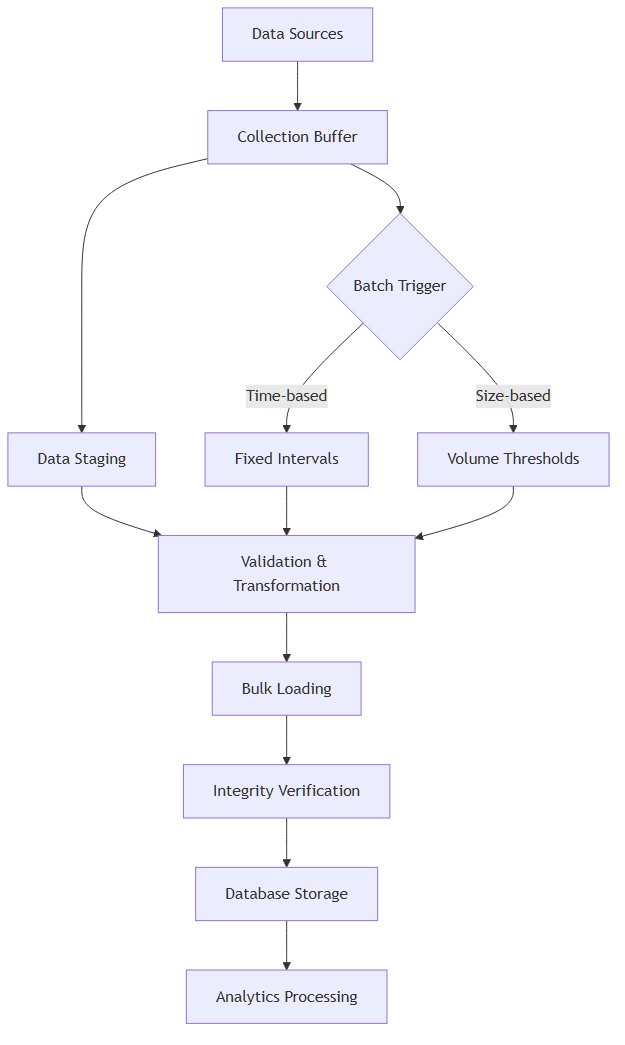
Batch ingestion employs a collect-then-process methodology that differs fundamentally from real-time streaming approaches. Instead of processing each data point individually as it arrives, batch ingestion accumulates data over specified intervals and processes entire groups simultaneously, maximizing resource efficiency and minimizing system overhead.
In industrial environments, this pattern is particularly valuable for handling high-volume telemetry data from manufacturing equipment, environmental sensors, and process control systems where immediate processing of individual data points is not required, but comprehensive analysis of operational periods is essential.
Core Processing Stages
Industrial batch ingestion systems implement several sequential processing stages:
Applications in Industrial Systems
Manufacturing Data Processing
In Model-Based Design workflows, batch ingestion enables efficient processing of production telemetry data collected over complete manufacturing cycles. This approach supports comprehensive quality analysis and process optimization by processing entire production runs as cohesive datasets.
Sensor Network Management
Industrial IoT networks generate continuous streams of environmental and equipment data that benefit from batch ingestion. The pattern enables efficient processing of sensor readings collected over operational periods, supporting trend analysis and predictive maintenance applications.
Predictive Maintenance Systems
Predictive maintenance applications use batch ingestion to process equipment telemetry data collected over maintenance intervals. This approach enables comprehensive analysis of equipment performance trends and degradation patterns across extended operational periods.
Batch Ingestion Patterns
Industrial systems implement several batching strategies based on operational requirements:
- Time-based Batching: Processing data collected over fixed time intervals (hourly, shift-based, or daily cycles)
- Size-based Batching: Triggering processing when predetermined record counts or data volumes are reached
- Event-based Batching: Initiating processing based on specific operational events or process state changes
- Hybrid Approaches: Combining multiple triggers to optimize processing efficiency and operational alignment
Performance Optimization Techniques
Batch ingestion provides significant performance advantages through several optimization strategies:
- Reduced I/O Operations: Bulk processing minimizes database connection overhead and transaction costs
- Efficient Index Updates: Batch operations enable optimized index maintenance and reduced fragmentation
- Parallel Processing: Large batches can be subdivided for concurrent processing across multiple system resources
- Resource Utilization Optimization: Concentrated processing periods enable better resource allocation and system planning
Implementation Best Practices
Technical Considerations for Industrial Environments
Industrial batch ingestion systems must address specific operational requirements:
- Timestamp Handling: Accurate preservation of original data timestamps during batch processing operations
- Partition Alignment: Efficient organization of time-series data into database partitions for optimal query performance
- Cross-system Coordination: Synchronization of batch processing across distributed industrial systems
- Resource Allocation: Scheduling batch operations to minimize impact on real-time operational systems
Data Consistency and Integrity
Batch ingestion supports robust data consistency through several mechanisms:
- Transaction Management: Atomic processing of complete batches to ensure data integrity
- Validation Checkpoints: Comprehensive data quality checks before database commitment
- Rollback Capabilities: Recovery procedures for handling failed batch processing operations
- Audit Trail Maintenance: Complete logging of batch processing activities for compliance and troubleshooting
Performance Monitoring and Metrics
Successful batch ingestion requires tracking specific performance indicators:
- Batch Processing Times: Duration required to process different batch sizes and data types
- Resource Utilization: CPU, memory, and I/O consumption during batch processing operations
- Error Rates: Frequency of batch processing failures and data quality issues
- Throughput Metrics: Volume of data successfully processed per time period
- Queue Depth: Accumulation of pending data waiting for batch processing
Related Concepts
Batch ingestion integrates closely with data streaming architectures and event-driven systems. It supports batch processing workflows and enables efficient data integration by organizing continuous data streams into manageable processing units.
The pattern is particularly valuable in industrial environments where telemetry data arrives continuously but can be processed efficiently in groups, enabling comprehensive analysis while optimizing system resource utilization and maintaining data integrity across complex manufacturing operations.