Understanding Metrics Backend Architecture
A metrics backend functions as the central repository and processing engine for time-series data in industrial systems. Unlike traditional databases, metrics backends are optimized for high-frequency data ingestion, efficient storage of timestamped measurements, and rapid query execution across large datasets spanning extended time periods.
The system typically integrates with various data collection agents and monitoring tools to provide comprehensive visibility into industrial operations, from individual sensor readings to complex system-wide performance metrics.
Core Components and Architecture
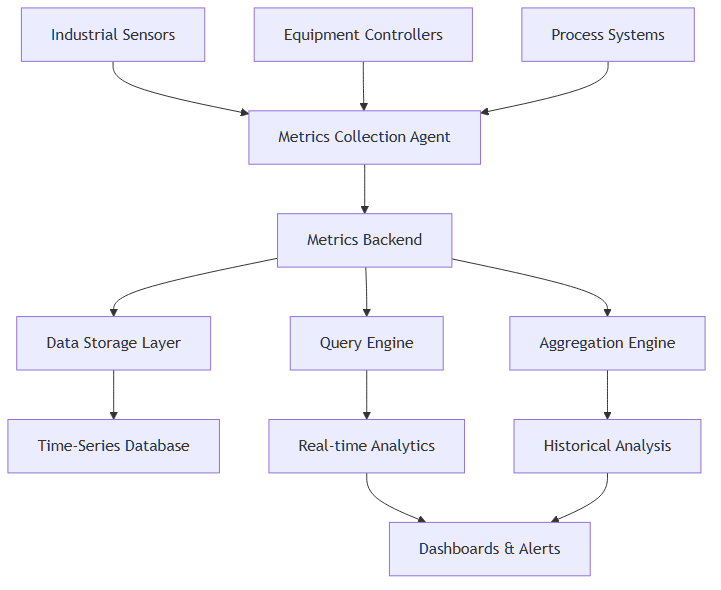
Key Components
Applications in Industrial Data Processing
Manufacturing Operations
Metrics backends enable comprehensive monitoring of:
- Equipment Performance: Machine utilization, cycle times, throughput rates
- Quality Metrics: Defect rates, process variations, statistical process control
- Energy Management: Power consumption, efficiency ratios, demand patterns
- Maintenance Indicators: Vibration analysis, temperature monitoring, wear patterns
Model Based Systems Engineering
In MBSE environments, metrics backends support:
- Simulation Results Storage: Model validation metrics and performance data
- Test Data Management: Automated test execution results and benchmarking
- Version Control Integration: Tracking model performance across iterations
- Compliance Reporting: Regulatory and standards compliance metrics
Industrial IoT Integration
Industrial IoT deployments leverage metrics backends for:
- Device Fleet Management: Health monitoring across distributed sensor networks
- Predictive Analytics: Pattern recognition for predictive maintenance
- Operational Intelligence: Real-time decision support systems
- Data Governance: Centralized control over industrial data assets
Performance Optimization Strategies
Storage Optimization
Query Performance
Implementation Considerations
Scalability Requirements
- Horizontal Scaling: Supporting increased data volumes through distributed architecture
- Vertical Scaling: Optimizing performance through enhanced hardware resources
- Metric Cardinality: Managing the number of unique metric-label combinations
- Data Ingestion Rate: Handling peak loads during high-activity periods
Integration Patterns
# Example metrics backend integration
class IndustrialMetricsBackend:
    def __init__(self, config):
        self.storage = TimeSeriesStorage(config)
        self.query_engine = QueryProcessor(config)
        self.aggregator = AggregationEngine(config)

    def ingest_metrics(self, metrics_batch):
        # Validate and normalize industrial metrics
        processed_metrics = self.preprocess_industrial_data(metrics_batch)

        # Store with optimized indexing
        self.storage.write_batch(processed_metrics)

        # Update real-time aggregations
        self.aggregator.update_running_calculations(processed_metrics)

    def query_equipment_metrics(self, equipment_id, time_range):
        return self.query_engine.execute({
            'metric_name': 'equipment_performance',
            'filters': {'equipment_id': equipment_id},
            'time_range': time_range,
            'aggregations': ['avg', 'max', 'min']
        })
Best Practices for Industrial Deployment
A well-designed metrics backend is essential for enabling data-driven decision making in industrial environments, providing the foundation for advanced analytics, operational optimization, and predictive maintenance strategies that drive efficiency and reliability in modern manufacturing and engineering systems.