Understanding High-frequency Sensor Data Fundamentals
High-frequency sensor data emerges from the continuous monitoring of industrial processes where rapid changes in temperature, pressure, vibration, flow rates, and other parameters must be captured with precision. Unlike traditional sensor systems that sample data every few seconds or minutes, high-frequency systems operate at rates of 1 kHz to 100 kHz or higher, generating massive volumes of temporal data that reveal critical process dynamics invisible at lower sampling rates.
The fundamental value of high-frequency sensor data lies in its ability to capture transient phenomena, detect anomalies in real-time, and provide the temporal resolution necessary for advanced control algorithms in Model Based Design applications.
Core Components and Data Characteristics
High-frequency sensor data exhibits several distinctive characteristics that require specialized handling:
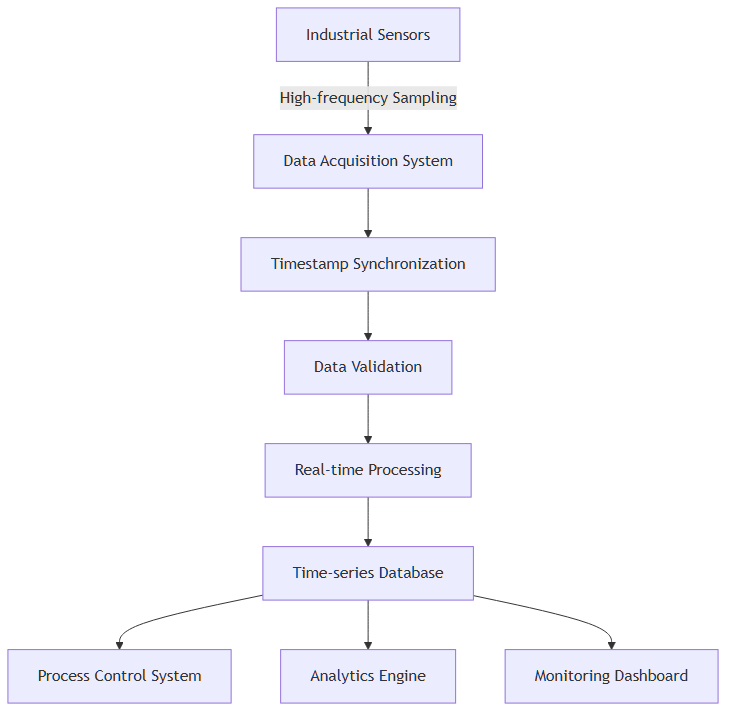
Applications in Industrial Data Processing
Equipment Health Monitoring
High-frequency sensor data enables continuous monitoring of rotating machinery, motors, and pumps through vibration analysis, bearing temperature monitoring, and acoustic signature analysis. This granular monitoring supports condition-based maintenance strategies and prevents catastrophic equipment failures.
Process Optimization
Manufacturing processes benefit from high-frequency monitoring of temperature profiles, pressure variations, and flow rates. This detailed data enables process engineers to optimize operating parameters, reduce energy consumption, and maintain product quality within tight specifications.
Safety System Integration
Critical safety systems require high-frequency sensor data for immediate detection of hazardous conditions such as pressure spikes, temperature excursions, or toxic gas concentrations. Rapid response capabilities can prevent accidents and protect personnel.
Data Management and Storage Strategies
High-frequency sensor data presents unique challenges for data management systems:
Storage Architecture: Specialized time-series databases with column-oriented storage and time-based partitioning optimize storage efficiency and query performance.
Compression Techniques: Advanced compression algorithms designed for time-series data can reduce storage requirements by 90% while maintaining query performance.
Ingestion Pipeline Design: Robust ingestion systems must handle data bursts, implement backpressure mechanisms, and ensure data integrity during high-volume periods.
Performance Optimization Techniques
Implementation Considerations
# Example configuration for high-frequency sensor data ingestion
sensor_config = {
    'sampling_rate': 5000,  # 5 kHz
    'buffer_size': 500000,  # 500K samples
    'compression': 'snappy',
    'partition_interval': '1h',
    'retention_policy': '30d',
    'downsampling_rules': {
        '1m': 'avg',
        '1h': 'avg',
        '1d': 'avg'
    }
}
Best Practices for Industrial Applications
Related Concepts
High-frequency sensor data management intersects with several key industrial concepts including telemetry data processing, sensor data integration, and Industrial Data Historian systems. Understanding these relationships is essential for designing comprehensive industrial monitoring architectures.
High-frequency sensor data represents the foundation of modern industrial monitoring systems, enabling unprecedented visibility into process dynamics and supporting advanced analytics that optimize performance, safety, and efficiency across industrial operations.