Summary
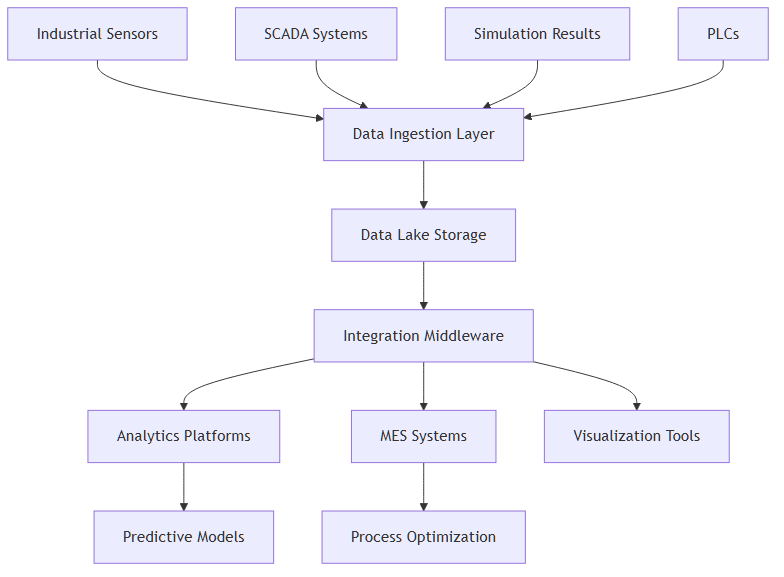
Data Lake Integration is the process of connecting and synchronizing data lakes with other data management systems, analytical platforms, and operational tools to create a unified data architecture for industrial applications. This integration is essential for manufacturing and R&D environments where massive volumes of sensor data, simulation results, and operational metrics must be accessible across multiple systems while maintaining data integrity and enabling real-time analytics for predictive maintenance and process optimization.
Core Components
Data lake integration in industrial settings involves several critical components that work together to ensure seamless data flow and accessibility:
Applications and Use Cases
Industrial R&D
Data lake integration enables research teams to combine experimental data with historical production data, facilitating advanced analytics for product development and process improvement. Researchers can access comprehensive datasets spanning multiple production lines, test facilities, and simulation environments.
Manufacturing Operations
Integration allows real-time monitoring systems to leverage historical data patterns for anomaly detection and quality control. Production managers can correlate current operational metrics with past performance data to optimize manufacturing processes and reduce downtime.
Model-Based Systems Engineering
In MBSE workflows, data lake integration supports the continuous validation of system models by providing access to real-world operational data. This enables engineers to refine digital twins and simulation models based on actual system behavior.
Implementation Considerations
When implementing data lake integration in industrial environments, consider these key factors:
Performance Considerations
Industrial data lake integration must handle high-volume, high-velocity data streams while maintaining system reliability. Key performance factors include:
- Throughput Optimization - Efficiently process thousands of sensor readings per second
- Query Performance - Enable fast retrieval of historical data for trend analysis
- Resource Management - Balance computational resources between real-time processing and batch analytics
- Fault Tolerance - Maintain data availability during equipment failures or network disruptions
Related Concepts
Data lake integration closely relates to data orchestration for managing complex data workflows, real-time analytics for immediate insights, and telemetry data management for handling sensor information. It also connects with industrial data collection strategies and time-series analysis techniques essential for manufacturing intelligence.
Successful data lake integration forms the foundation for advanced industrial analytics, enabling organizations to harness the full potential of their operational data while maintaining the flexibility to adapt to evolving business requirements and technological advances.