Understanding Compaction Fundamentals
Compaction serves as a critical maintenance operation in industrial data management systems, particularly those handling continuous streams of sensor data, test measurements, and simulation results. Unlike traditional database maintenance, compaction operates automatically in the background without interrupting data collection or analysis workflows.
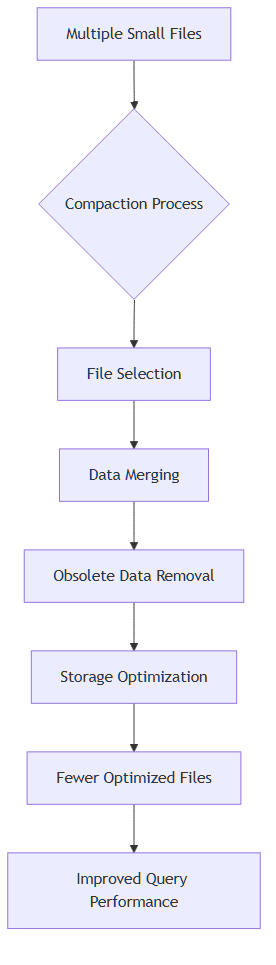
The fundamental principle behind compaction involves transforming multiple smaller data files into fewer, larger, more efficiently organized files. This process addresses the natural fragmentation that occurs when industrial systems continuously write measurement data, test results, and operational parameters to storage systems.
How Compaction Works
The compaction process follows a systematic approach to data reorganization:
Compaction Strategies in Industrial Systems
Size-Tiered Compaction
This strategy triggers when similarly-sized files accumulate, making it ideal for systems with consistent data generation rates, such as regular sensor sampling or scheduled test runs.
Leveled Compaction
Data is organized into non-overlapping levels, providing predictable performance characteristics essential for real-time monitoring and control systems.
Time-Window Compaction
Compacts data based on temporal proximity, particularly useful for organizing historical test data, maintenance records, and operational logs by time periods.
Applications in Industrial Data Management
Industrial R&D
- Optimization of experimental data storage from test benches and prototype evaluations
- Consolidation of simulation results and model validation data
- Efficient storage of design iteration histories and parameter studies
Manufacturing Operations
- Streamlining of production line sensor data and quality control measurements
- Optimization of maintenance scheduling data and equipment performance logs
- Consolidation of process control data and alarm histories
Model-Based Systems Engineering
- Efficient storage of system models and validation results
- Optimization of requirements traceability data and verification records
- Streamlined storage of configuration management data and change histories
Performance Considerations
Compaction introduces several performance trade-offs that industrial engineers must consider:
Storage Efficiency: Compaction typically reduces storage requirements by 20-60% through elimination of redundant data and improved compression ratios.
Query Performance: Well-compacted data structures can improve query response times by 2-10x, particularly for time-range queries common in industrial analysis.
Write Amplification: The compaction process temporarily increases disk I/O as data is read, processed, and rewritten, requiring careful resource planning.
Best Practices for Industrial Applications
Implementation Considerations
When implementing compaction in industrial data systems, consider the data access patterns typical in engineering environments. Historical data analysis, trend identification, and compliance reporting often require different optimization strategies than real-time monitoring and control applications.
The compaction strategy should align with data retention policies, with more aggressive compaction for older data that is accessed less frequently, while maintaining quick access to recent operational data.
Compaction represents a fundamental component of modern industrial data architecture, enabling organizations to maintain efficient, high-performance data systems while managing the ever-increasing volumes of sensor data, test results, and operational metrics generated by contemporary industrial operations.