Understanding CDC Fundamentals
Change Data Capture operates by monitoring data sources for modifications and capturing these changes in a structured format that can be consumed by downstream systems. Unlike traditional batch processing approaches that require periodic full data synchronization, CDC enables real-time data integration by capturing only the modified data records.
The fundamental principle behind CDC is to minimize the performance impact on source systems while ensuring that all data changes are accurately captured and propagated. This is particularly important in industrial environments where operational systems cannot afford performance degradation due to data extraction processes.
Core Components and How It Works
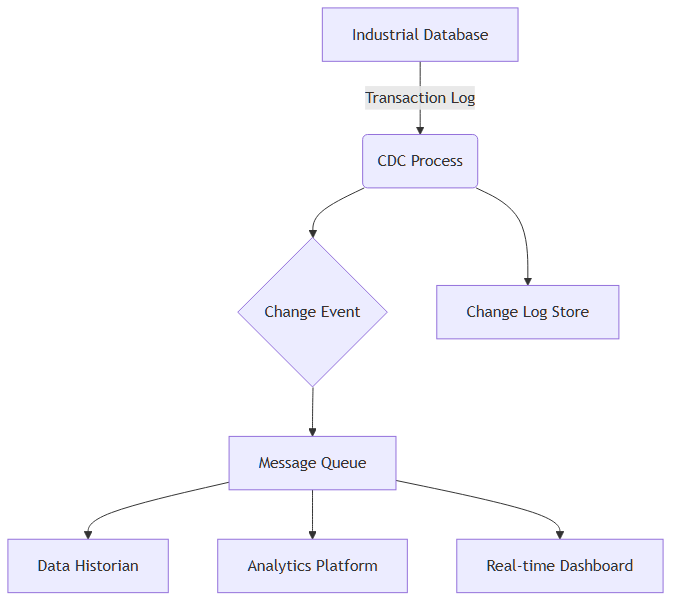
CDC implementations typically consist of several key components:
Applications and Use Cases
Industrial Data Management
In industrial settings, CDC serves multiple critical functions:
- Equipment Data Synchronization: Capturing changes in equipment status, sensor readings, and operational parameters for real-time monitoring
- Quality Control Integration: Synchronizing quality measurement data between production systems and quality management databases
- Maintenance Data Propagation: Ensuring maintenance schedules and work orders are synchronized across enterprise systems
Model Based Design Integration
CDC enables seamless integration between simulation environments and operational systems by:
- Parameter Synchronization: Automatically updating simulation models with real-world operational parameters
- Result Validation: Capturing simulation results and propagating them to validation systems
- Configuration Management: Tracking changes in model configurations and design parameters
Industrial Analytics and Reporting
CDC supports advanced analytics by providing:
- Real-time Data Streaming: Enabling continuous data flow to analytics platforms without impacting source system performance
- Historical Data Reconstruction: Maintaining complete audit trails of all data changes for compliance and analysis
- Cross-system Data Correlation: Synchronizing data across multiple industrial systems for comprehensive analysis
Implementation Considerations
Best Practices
Performance Considerations
CDC implementations must balance real-time data delivery with system performance. Key considerations include:
- Batch Size Optimization: Configuring appropriate batch sizes for change data processing to balance latency and throughput
- Network Bandwidth Management: Ensuring sufficient network capacity for real-time data transmission
- Storage Requirements: Planning for adequate storage capacity for change log retention and processing
Integration with Industrial Systems
CDC integrates seamlessly with various industrial technologies:
- SCADA Systems: Synchronizing operational data with enterprise systems
- Manufacturing Execution Systems: Maintaining consistency between production and planning systems
- Predictive Maintenance platforms: Ensuring real-time availability of equipment condition data
Related Concepts
CDC is closely related to several other data management concepts essential in industrial environments:
- Event-Driven Architecture: CDC often serves as the foundation for event-driven systems
- Data Streaming: CDC enables continuous data streaming for real-time analytics
- Data Replication: CDC is a sophisticated form of data replication that captures incremental changes
Change Data Capture represents a critical technology for modern industrial data management, enabling real-time synchronization and analytics while maintaining system performance and reliability.