An aggregation pipeline is a sequence of data transformation stages that process industrial time-series data in a defined order, enabling complex analytics through composable operations. This architecture is essential for transforming raw sensor data into actionable insights in industrial data processing systems, providing engineers with the ability to perform sophisticated analysis on massive datasets collected from manufacturing equipment, process control systems, and monitoring devices.
Core Components
An aggregation pipeline consists of several interconnected stages that work together to process and analyze data:
Each stage receives input from the previous stage and passes its output to the next, creating a streamlined workflow for data processing.
Industrial Applications
Manufacturing Process Monitoring
Aggregation pipelines excel at processing high-frequency sensor data from production lines. Engineers can create pipelines that filter out noise, group measurements by equipment zones, calculate rolling averages for temperature or pressure readings, and generate alerts when parameters exceed operational thresholds.
Equipment Performance Analysis
For predictive maintenance applications, pipelines can aggregate vibration data, temperature readings, and operational metrics to identify patterns that indicate potential equipment failures. This enables maintenance teams to schedule interventions before costly breakdowns occur.
Energy Management Systems
Industrial facilities use aggregation pipelines to process energy consumption data from multiple sources, calculating efficiency metrics, identifying peak usage periods, and optimizing energy distribution across different production areas.
Implementation Architecture
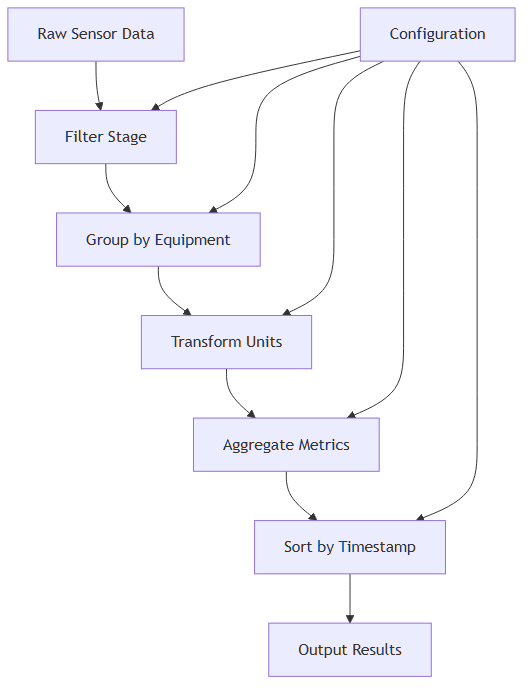
Performance Considerations
Best Practices
Integration with Industrial Systems
Aggregation pipelines integrate seamlessly with industrial data historians and SCADA systems, enabling real-time processing of operational data. They support various input formats including OPC-UA, MQTT, and CSV, making them adaptable to existing industrial infrastructure.
The pipeline architecture supports both batch processing for historical analysis and stream processing for real-time monitoring, providing flexibility for different use cases in industrial environments. This versatility makes aggregation pipelines a cornerstone technology for implementing effective Model Based Design workflows in modern industrial systems.