Cutting product testing time by 90% at a leading European HVAC manufacturer
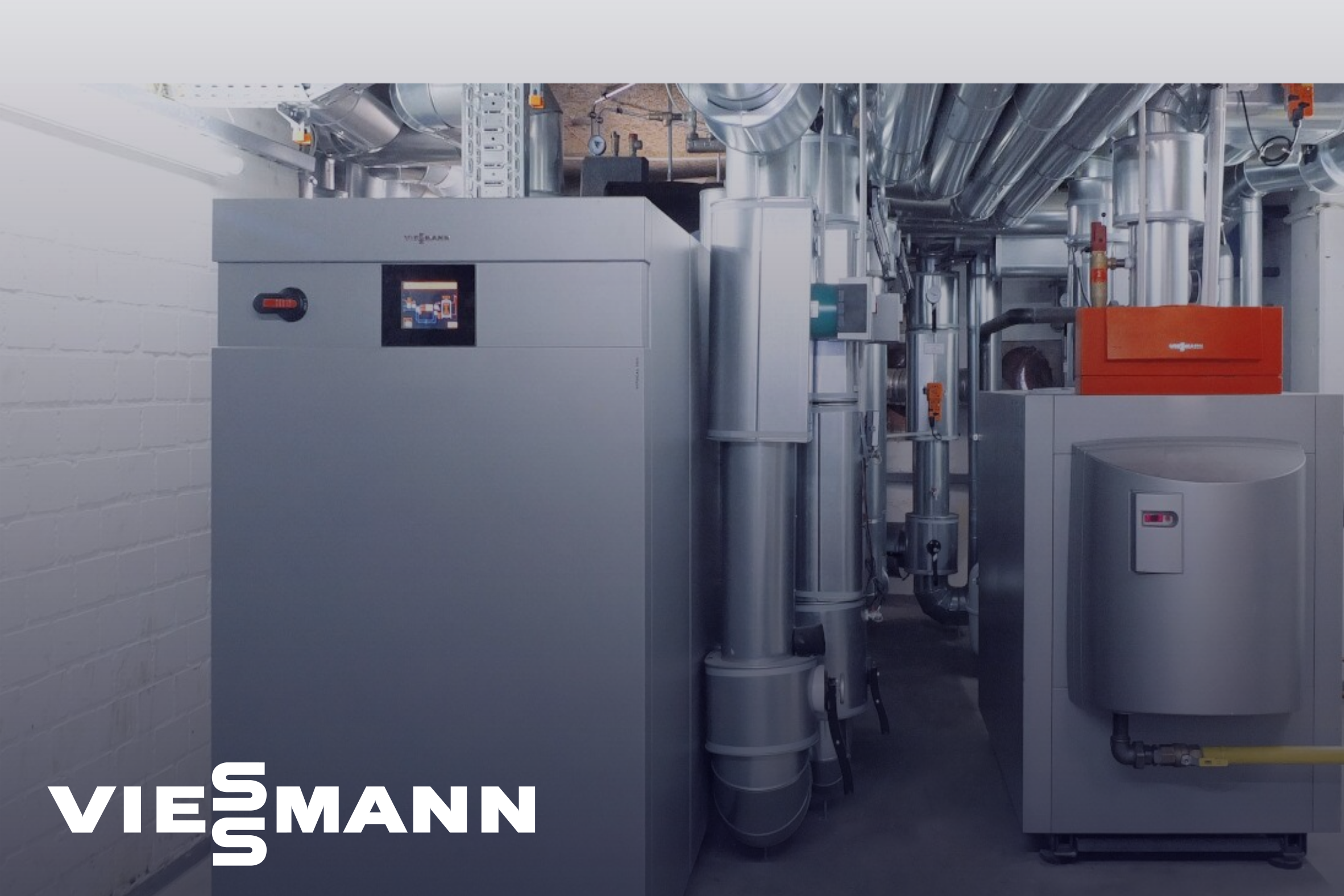
As Europe moves to phase out gas-fired boilers, Viessmann faced pressure to develop new heat-pump technologies faster than ever — without compromising performance. The bottleneck wasn't ideas. It was the test-data infrastructure standing between its R&D engineers and the next experiment.
The challenge
Viessmann's Advanced Engineering team runs more than 40 test chambers, generating complex data streams from hardware, environmental controls, sensors and probes. Engineers build models in Modelica and MATLAB/Simulink, run CFD simulations, and need to compare simulation output against live test data in real time.
The reality fell short of that. Test data was scattered across InfluxDB instances, CSVs and proprietary formats, with configuration metadata spread across network drives. Simulation tools couldn't easily receive live data or write results back to central storage, and releasing a new model version meant manually cloning repositories, adapting interfaces and rerunning simulations. Without automated analysis, tests ran on fixed schedules regardless of whether a conclusion had already been reached.
Traditional enterprise platforms demanded costly customization and process restructuring; bespoke pipelines built on FIWARE, RedPanda and Docker turned out brittle and hard to maintain. The deeper problem was a skills gap: the mechanical engineers and thermodynamicists understood the R&D process intimately, but weren't software developers.
We need something giving engineers tools to build solutions themselves. They know what they want, but aren't software developers.
Marcus Thiele — Director of Advanced Engineering, ViessmannThe solution
Viessmann selected Quix for its ability to let systems engineers build production-grade infrastructure without deep software expertise. The Python-first environment matched the team's existing tooling, so a centralized pipeline replaced the fragmented scripts and manual transfers: data from MQTT brokers, PLCs and controllers now flows through containerized Python services that normalize and time-align the raw time-series before it lands in InfluxDB and MongoDB.
The platform also provided standardized connectivity for MATLAB, Simulink, Modelica FMUs and CFD tools, so engineers can feed live sensor data into models running in parallel with physical tests and flag deviations as they happen. Git-based workflows and container infrastructure replaced the fragile manual model-deployment process with built-in CI/CD.
Crucially, Quix's integrated AI coding assistance and Claude Code Skills let non-software engineers build custom plugins in hours rather than days, and the Quix team worked alongside Viessmann's engineers through workshops and pair programming — building capability in-house rather than creating an external dependency.
AI-assisted coding means even mechanical engineers accomplish complex software tasks. Just type "push to Quix" and it's done.
Marcus Thiele — Director of Advanced Engineering, ViessmannThe results
Unlike previous solutions that needed a top-down mandate, engineers began building on day one — the Python-native environment and AI tooling removed the learning barriers that had stalled earlier initiatives. Real-time analysis, automated test management and model-driven experiment design created a credible path to the team's 90% testing-time reduction goal, by eliminating redundant runs and stopping successful tests early.
The self-service model let the team move at its own pace without depending on central IT or external integrators — and by year-end, engineers at one site were operating independently and onboarding colleagues elsewhere, championing the platform across the company.
When we started with Quix, everything seemed much easier. For engineers, it felt natural and they built from scratch. They were really excited and started building on day one.
Marcus Thiele — Director of Advanced Engineering, Viessmann