Optimizing engineering efficiency with automated data processing and ML
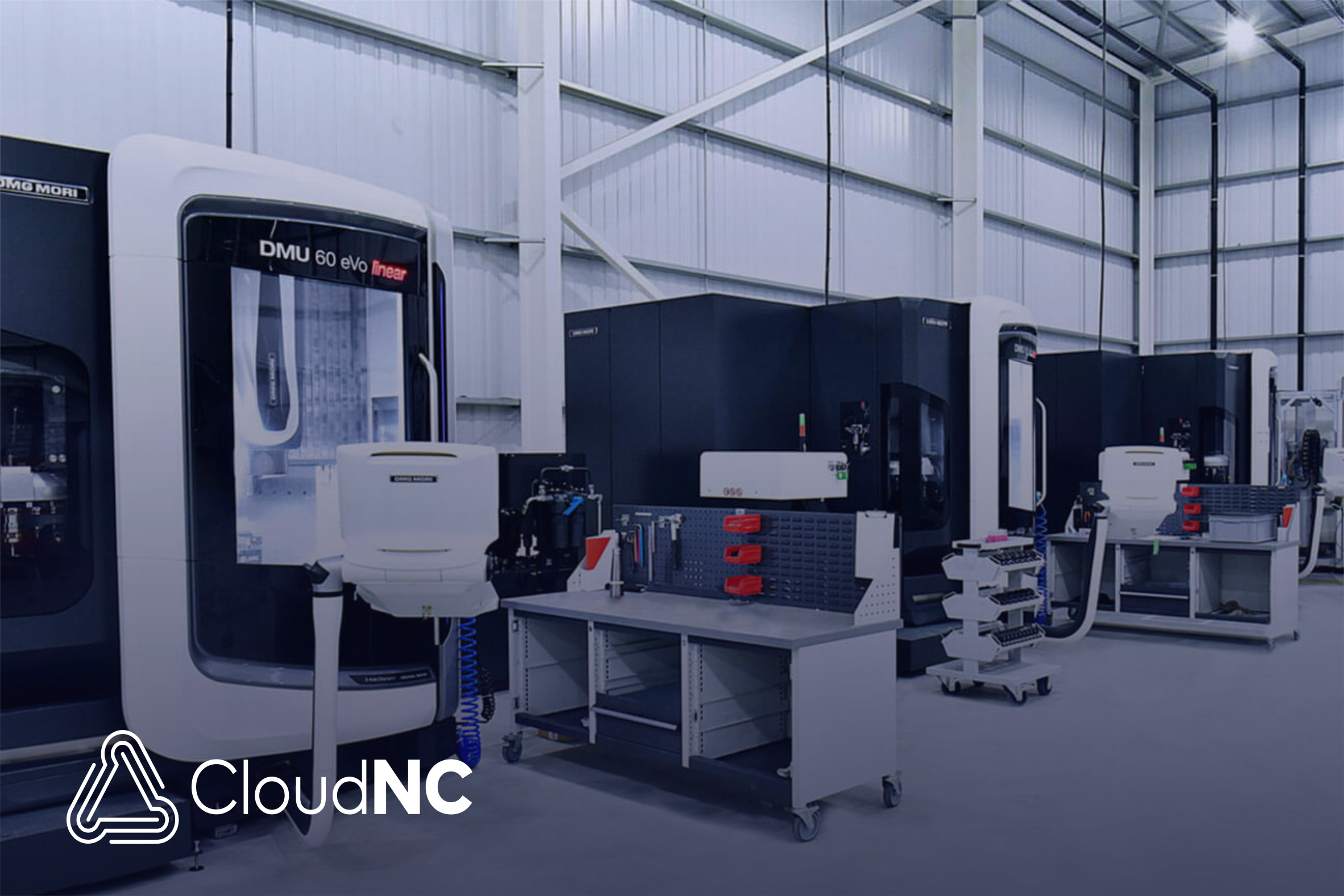
CloudNC, a London-based manufacturing-technology company named by the World Economic Forum as one of 2021's 100 most promising technology pioneers, set out to make manufacturing 10x more efficient, sustainable and fast — powered by high-frequency time-series data. The blocker was getting at that data in real time.
The challenge
CloudNC identified four obstacles to optimizing the factory floor. Scheduling needed live machine data to update continually, but existing batch-processing software stood in the way. Predictive maintenance was nearly impossible because changing parts and materials put varying stress on each specialized machine. Real-time alerting on vibration patterns demanded minimal latency, not delayed batches. And there was no way to gather the data needed to fine-tune the ML models that calculate optimal cutting paths.
The solution
CloudNC selected Quix to move from batch-based analytics to modern stream processing with machine learning built in. Linux boxes on the factory floor use the Quix Streams client library to ingest high-frequency time-series data from machines to the cloud, where automated continuous processing generates real-time value that downstream systems consume immediately. Data stays in memory throughout the pipeline for low latency, and both raw and processed data are stored to support batch analytics and ML development alike.
The team started simple — detecting machine cycle times — and expanded into comprehensive streaming and batch analytics using Quix's Query API while building higher-value real-time applications on top.
Quix has given us an environment to handle a huge amount of real-time machine data.
Chris Angell — Lead Systems Engineer, CloudNCThe results
Two CloudNC engineers completed the entire solution in just four weeks, saving an estimated 16 weeks of infrastructure-development effort that was redirected to other priorities. What began as a basic recording problem grew into an organization-wide time-series analytics capability spanning four areas: continuous monitoring for engineering efficiency and reliable scheduling; physics-based wear models for proactive, predictive maintenance; high-frequency vibration processing for instant problem detection; and continuous data gathering that lets ML models retrain automatically on current information.