Has F1 become too software defined?
What are the implications for F1 engineers as software plays an increasingly defining role in on-track performance?
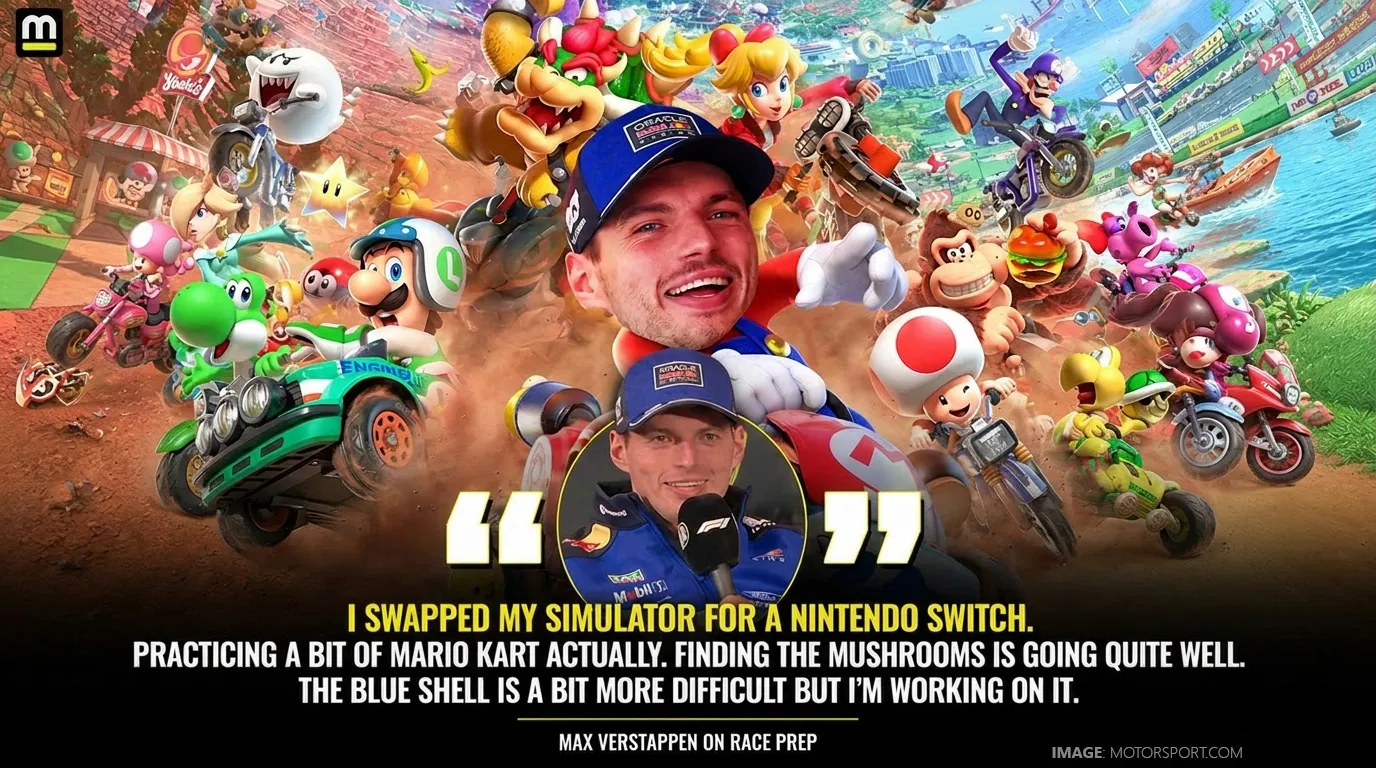
Software is ruining F1 for drivers and fans by replacing skill with automated control. But the same kind of automation is quietly handing engineers a competitive edge in R&D.
Software over skill
Max Verstappen's verdict that 2026's racing feels "like Mario Kart" captures a concern shared widely among drivers and fans. The spectacle has thinned even as overtakes have gone up. The conversation now revolves around technical automation — superclipping, energy management, overtake modes — instead of late braking, aggressive moves and defensive craft.
Last month's Ollie Bearman crash showed the safety dimension: unexpected speed differentials appear as cars deploy or harvest energy. It was enough for F1 to reconsider the regulations.
Drivers describe a car whose Electronic Control Unit optimises the battery in counter-intuitive ways. Super clipping is the clearest example — the software redirects engine power to the battery instead of the wheels, so a driver flat on the throttle gets less than they ask for and the car decelerates. The software has overridden driver control.
Using AI and automation to drive competitive advantage
The same sophistication that causes problems on track is a platform for advantage off it. Systems engineering runs on continuous cycles of simulation, testing and data analysis — and configuring tests and processing the resulting data is tedious, complex work.
AI agents now do that retrieval and processing for engineers. The interesting decisions stay with the engineer — what to test next, how to read the data, which design to pursue — while the agent handles the low-level data exploration. That only works if a team has genuinely sophisticated data infrastructure underneath.
F1 teams solved streaming, storing and querying telemetry at a scale most R&D operations are only beginning to contemplate. McLaren and Williams worked through data-architecture problems years before aerospace, automotive testing or energy R&D ran into them. Ironically, that same data and software sophistication is part of what made the car automation — and the current regulations — possible in the first place.
Engineers who lean on agentic AI and automation make faster decisions, test innovations more quickly, and prove value to manufacturers in a sport decided by milliseconds. Automation may be a problem for drivers and fans, but for systems engineering it's the opposite: when agents handle the routine work, engineers get to focus on engineering. Drivers don't get that luxury.